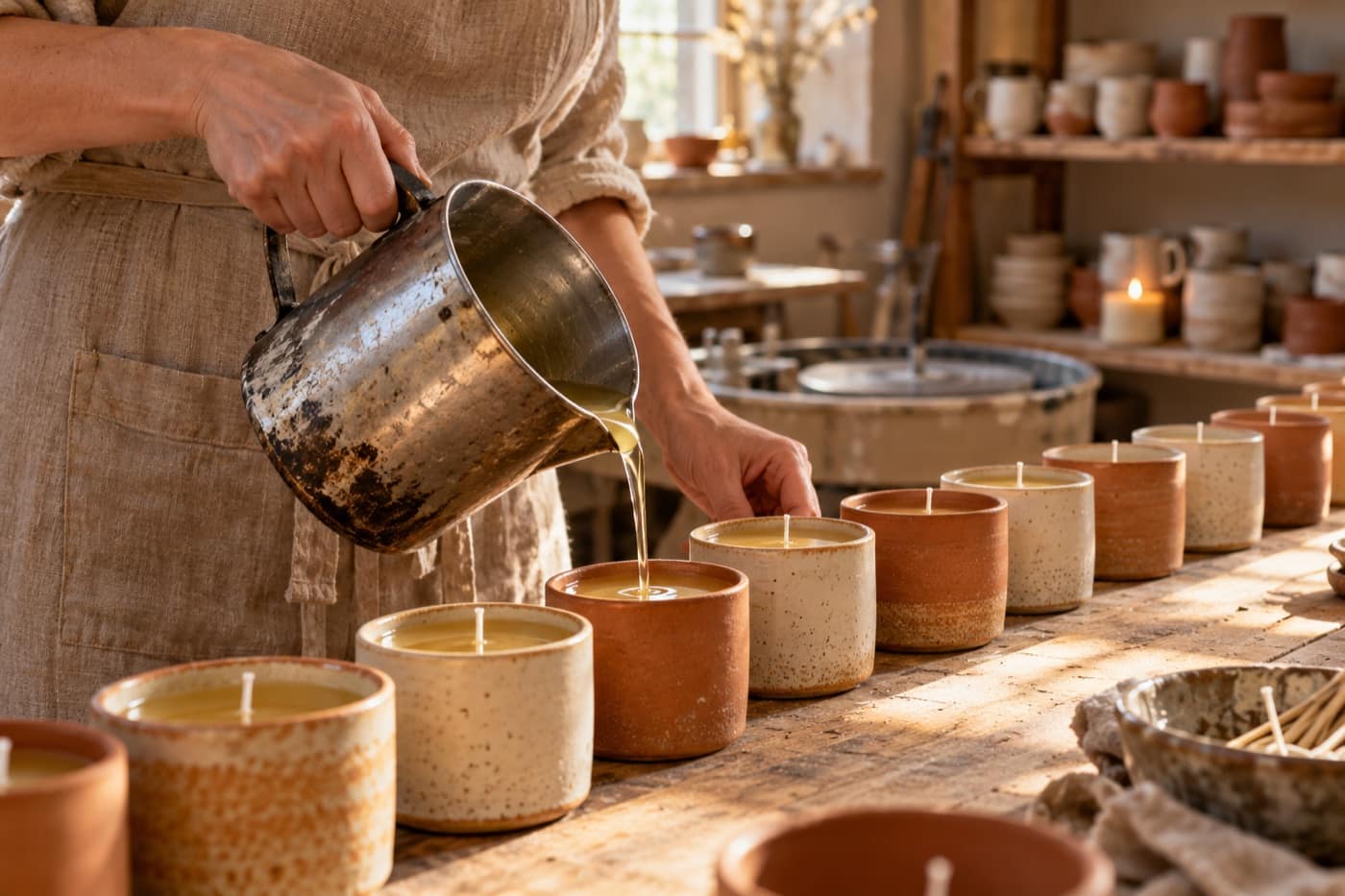
Come on in. The pour pot is up to 185°F by the time most folks find the door. Two benches, one kiln, and a room that smells like cedar.
An open pour is the simplest thing we do. You watch Maren pour a batch. You ask whatever you want. You go home with a tealight. That's the whole of it.
What a batch looks like
A batch is forty. Maren lines them up on her bench with the cotton wicks centred before any wax moves. Then she builds the scent in the pot, the same way every time, so the fortieth candle smells like the first one. Forty is the number we settled on, and we haven't found a reason to change it.
The pour itself goes quick. At 185°F the coconut and soy wax runs clean and settles flat. She works down the row, and the room tends to go quiet for a minute while everyone watches the surface turn from glossy to matte.
Then nothing happens for two weeks. That's the part people don't expect. The candles go up on the shelf to cure, and the cure is where the scent throw comes from. A candle lit the day it's poured smells faintly. The same candle two weeks on fills the room.
Ask Theo too
Theo is usually at the wheel across the room, throwing cups for the Tidepool Vessel Candle. Every vessel candle starts as a lump of clay. He'll trim it, bisque it, glaze it, and fire it again. Ask him about the kiln and he'll tell you the glaze firing goes to 2,232°F, and that about one in twelve pieces doesn't come out whole. He says that last part pretty evenly by now.
People ask us all sorts. Why coconut and soy. Why cotton wicks. Why Ember costs $34 when the grocery store sells candles for less. We'll answer every one of them, and the answer is usually sitting right there on the bench in front of you.
We've been in the River Arts District since 2019, and the pour is the best way we know to show you what goes into a candle before it reaches your shelf. Ask at the studio when you're in town and we'll tell you when the next batch goes in.
Smell everything before you choose.